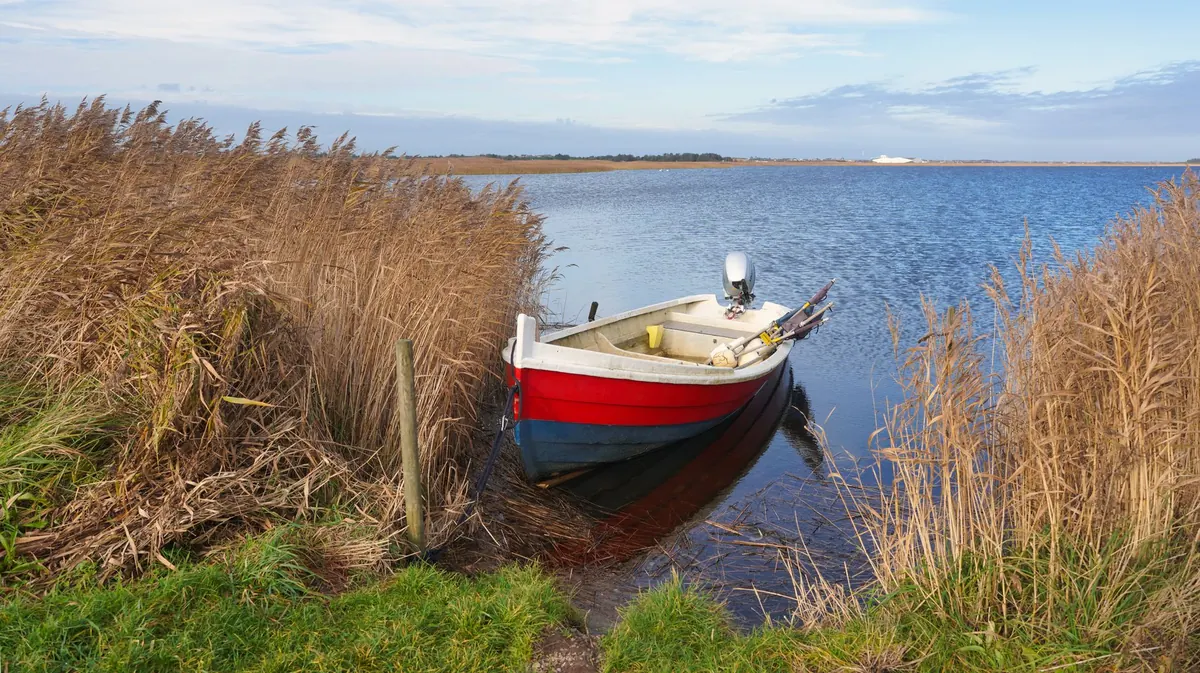
The Broads can look intimidating from the bank: a low wooden cruiser drifting sideways, a sailing dinghy cutting across your bow, a bridge that seems far too low to pass beneath. None of it requires a licence. You can hire a day boat, take a short handover from the yard and be steering your own craft within the hour. What it does require is a bit of preparation and a willingness to go slowly. Both are easy.
No licence, but not no rules
Hiring a boat on the Broads doesn't require a certificate, a course or any previous experience. The boat itself is registered and the yard carries the paperwork; you just need to follow instructions and keep to a sensible speed. Day boats are usually small, open and forgiving, with a modest engine that tops out well below the speed limit.
The Broads byelaws still apply to you, though, and they're enforced. Treat the helm like a car: if you're planning a long pub lunch at a riverside staithe, save the drink for after you've handed the boat back.
Choosing where to hire decides your day
The northern rivers — the Bure, the Ant and the Thurne — are the busiest, with hire yards at Wroxham, Horning, Potter Heigham and Stalham. They're convenient and well set up for beginners, but on a sunny Saturday in July you'll share the water with plenty of other people doing exactly the same thing.
The southern rivers — the Yare, the Waveney and the Chet — are quieter, with yards around Beccles, Oulton Broad and Loddon. If your idea of a good day out involves more heron than hire boat, head south.
Ask one crucial question before you book: which bridges can this boat pass under? Wroxham Bridge and Potter Heigham Bridge are famously low, and many day boats can't get through them at all. That's fine — it just means your route is decided for you, and you should know which before you set off.
What the handover actually involves
You'll get ten to twenty minutes with a member of staff, usually alongside the mooring, before you're let loose. Pay attention; this is the bit that stops the day going wrong.
- Life jackets and buoyancy aids, and how to fit them properly. Children and non-swimmers should wear them from the moment they step aboard.
- Starting the engine, using the throttle, and how the boat steers. Most day boats have a wheel; a few have a tiller, which works the opposite way to what you'd expect until it clicks.
- Stopping. Boats have no brakes. You slow down by putting the engine into reverse, which means planning several boat lengths ahead.
- Mooring: approach slowly, into the wind or against the current where you can, and never jump ashore with a rope looped round your hand.
- What to do if you run aground or the engine cuts out. Usually: don't panic, use the quant pole if there is one, and ring the yard.
- The yard's phone number, written down somewhere that isn't your phone.
Take the map they offer. The Broads is well signposted on the water, but junctions look surprisingly alike from a low seat.
The rules of the water, in plain English
Keep to the right
On the Broads, boats pass each other on the right — the opposite of driving. It sounds trivial until you meet a cruiser coming the other way on a bend.
Sails and oars come first
Sailing boats, rowing boats and canoes generally have priority. Give them room, don't cut across their course, and remember a sailing boat can't simply stop or reverse.
Speed and wash
There's a low speed limit across most of the Broads, typically around 5mph, with lower limits in places, so watch for signs. The real test isn't the number, it's the wash: if your boat is sending a breaking wave towards moored craft, anglers or the bank, you're going too fast.
Bridges
Only pass under a bridge if you're certain of the clearance, and check the height gauge. If in doubt, turn around. Some bridges need a pilot or a booking, and the yard will tell you which.
Tides and mooring
Most of the main rivers are tidal, so levels rise and fall. Leave enough slack in your ropes, and think about what happens when the water drops. Don't moor in the channel or on a bend, and use marked 24-hour moorings rather than a tempting but private stretch of bank.
Quiet routes for a first day out
Pick a short out-and-back rather than a loop. An hour and a half each way with a stop in the middle is plenty for a first trip — you'll spend more time enjoying it and less time watching the clock.
From Stalham, up the Ant. A gentle run to Barton Broad, then on towards How Hill, with reeds, marsh harriers and very few other boats on a weekday.
From Wroxham or Horning. Salhouse Broad and the quiet dykes around it make an easy half-day, with a staithe to stop at and a small beach for a picnic.
From Beccles or Oulton Broad. The Waveney towards Geldeston is slow, green and peaceful, with a riverside pub at the end if you've timed it right.
Leave Breydon Water for another trip. It's wide, tidal and exposed, and not the place to learn how your boat handles a crosswind.
A simple plan for your first trip
Book ahead in summer, ideally for a morning slot while the water is calm and the wind hasn't got up. Bring a warm layer, sun cream, water and a packed lunch. Listen to the handover, then ask the two questions that matter: which bridges can we pass, and what route would you recommend for our time? Go slowly. Keep to the right, give way to sails, and cut the engine early as you approach a mooring.
If the wind picks up or the clouds roll in, turn back. You can hire again. Half the pleasure of the Broads is that the same stretch of water looks completely different on a grey Tuesday in October — and it's there all year. Bridge restrictions and local navigation notices do change, so treat the yard's advice as final, and ask them about current rules for your route if you're hiring anything larger or heading further afield.
Photo: Wolfgang Weiser / Pexels