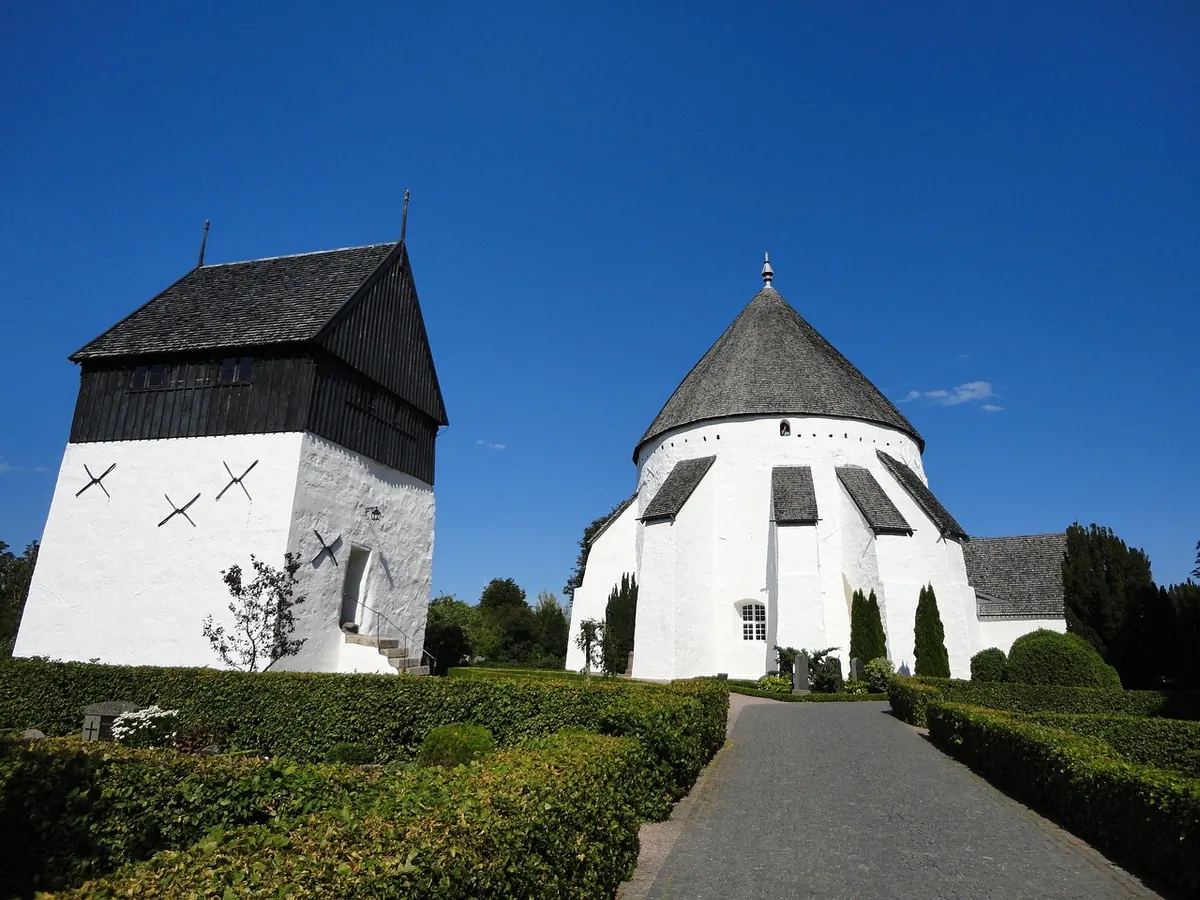
Norfolk's skyline has a signature, and it is not a spire. It is a squat drum of flint and mortar standing at the end of a lane, often thatched, often alone for a mile in any direction. There are well over a hundred of these round towers in the county, the greatest concentration in England. Once you know what you are looking at, they stop being a curiosity and start reading like a geological map of how this county was built.
Why Norfolk ended up with so many round towers
Two forces did most of the work: geology and money.
Norfolk has flint in extraordinary abundance and almost no good freestone. In Northamptonshire or Lincolnshire a medieval mason could quarry limestone that split into blocks with clean, square corners. In Norfolk he had flint: hard, brittle, glassy, and usually no bigger than a fist. Flint has no natural grain to split along, so it resists being cut into neat rectangular blocks, and it is too small to build tall, sharp corners from. Rubble is fine for a wall. Rubble is very bad at corners — and a square tower is mostly corners.
A round tower has none. The load travels down the curve, the wall is a continuous drum, and the mason never has to solve the hardest problem in the building. The old suggestion that round towers were defensive refuges does not hold up well; a bell tower with a spiral stair inside its own wall thickness was a statement of status and a practical place to hang bells, and that is reason enough. Most surviving round towers were built between the eleventh and thirteenth centuries, when parishes were being formed and lords were competing to endow churches. Some incorporate earlier work, and a few may have pre-Conquest origins.
How a flint tower was actually built
Rubble in, skin on
The core of the wall is rubble — whole flints and broken stone laid in thick lime mortar, which sets hard around the irregular shapes and holds them as a single mass. On the outside, a skin of flints laid in courses gives a reasonably even face. Lime mortar matters here: it is soft, it breathes, and it lets a flint wall move slightly with frost and settlement. Repointing in hard cement traps moisture and is one of the things that does real damage to these buildings.
Where the stone came from
Flint could not do everything. Doorways, window surrounds, belfry openings and the quoins on any square section needed dressed stone, so it was shipped in — limestone from Caen in Normandy in the Norman period, and later from Barnack and elsewhere. That is why the towers look two-toned: dark flint with pale, creamy dressings. Later medieval masons went further and knapped flint — split so the flat, glassy face sits outward — sometimes set flush with the mortar and combined with stone in patterns. That technique, flushwork, is a Norfolk and Suffolk speciality.
How to read a round tower
You do not need a guidebook to get a great deal out of one. Stand back, then walk round it slowly, and look for these:
- The tower arch. Step inside and look back at the opening into the nave. Its jambs, capitals and mouldings are usually the oldest datable part of the building.
- Belfry openings. Round-headed, often two per face. Small round windows lower down lit the stair and let sound out.
- Changes in height. A band of brick or a shift in style usually marks a later top stage, added after a collapse or simply to keep up with a neighbour.
- The stair. It runs within the thickness of the wall. Look for slit windows following it up, and for the small doorway that once opened onto a rood screen or gallery.
- Tooling and wear. Hand-cut stone shows diagonal tool marks; centuries of hands have polished door jambs and font rims. These are the human details.
Five round towers to start with
All of these are real, working or cared-for buildings, not exhibits. Treat them accordingly.
- St Mary's, Fishley. A small, tucked-away church near the Broads with a round tower and thatched roofs — the classic image of the type.
- St Mary's, Haddiscoe. A tall, handsome Norman round tower in the south of the county, worth pairing with a walk on the nearby marshes.
- St Gregory's, Heckingham. Round tower, thatch, and a rare apsidal chancel. Small, quiet, and unusually complete in its proportions.
- St Andrew's, Little Snoring. Notable for its detached round tower, standing a few steps away from the nave — a rare arrangement and a good conversation starter with anyone you bring along.
- St Mary's, East Somerton. A ruin near the coast, with a tree grown up through the walls. Atmospheric rather than instructive, and the surrounding stories are local legend rather than history.
Visiting with respect
Rural churches are usually welcoming places, but they are also fragile and often maintained by a handful of volunteers. A few habits make you a good visitor.
- Check opening times before a long drive. Many are open in daylight, some are locked with a keyholder notice nearby. Redundant churches are often cared for by the Churches Conservation Trust and open daily.
- Park so that a tractor, a horsebox or a hearse could still get through. Verges are soft in winter and gateways are working entrances.
- Close gates behind you, keep dogs out of churchyards unless there is a clear sign, and never walk a shortcut across a crop.
- Remember the churchyard is in use. Keep to paths, keep voices low, and leave flowers and ornaments alone.
- Do not touch the flintwork or chip a souvenir. Knapped flint faces flake, and old lime mortar crumbles under pressure. Look with your eyes, not your hands.
- Leave bats, owls and nesting birds in peace. Towers are wildlife habitat as well as architecture.
- If you spot a broken window, a loose slate or a door left open in bad weather, tell the parish — a quick email to the local benefice office is genuinely useful.
If you want to go further
The Round Tower Churches Society has been recording and campaigning for these buildings since the 1970s, and its gazetteer and newsletters are the obvious next step if you want to chase the whole set. The Norfolk Churches Trust is another good route in, and its sponsored Ride and Stride day each September opens hundreds of churches that are normally shut
Photo: Agropyron / Pixabay