For most of the year, Norfolk's lowland heaths look muted: grey-green stems, dark gorse, patches of bare sand. Then, from late July, the colour arrives. First a blush across the slope, then whole ridges of purple, humming with bees, with a honeyish scent drifting over the path. It is one of the county's most reliable late-summer spectacles, and one of the easiest to miss if you don't know where to stand.
What's Flowering, and When
Three plants do most of the work, and they don't peak together. Knowing which is which helps you time a visit.
- Bell heather (Erica cinerea) — deep, almost magenta purple, flowering earlier than the rest. Look for it from late June into August, usually on drier, higher ground.
- Ling or common heather (Calluna vulgaris) — the main event. Softer purple, slightly pinker, and usually at its best from mid-August into early September.
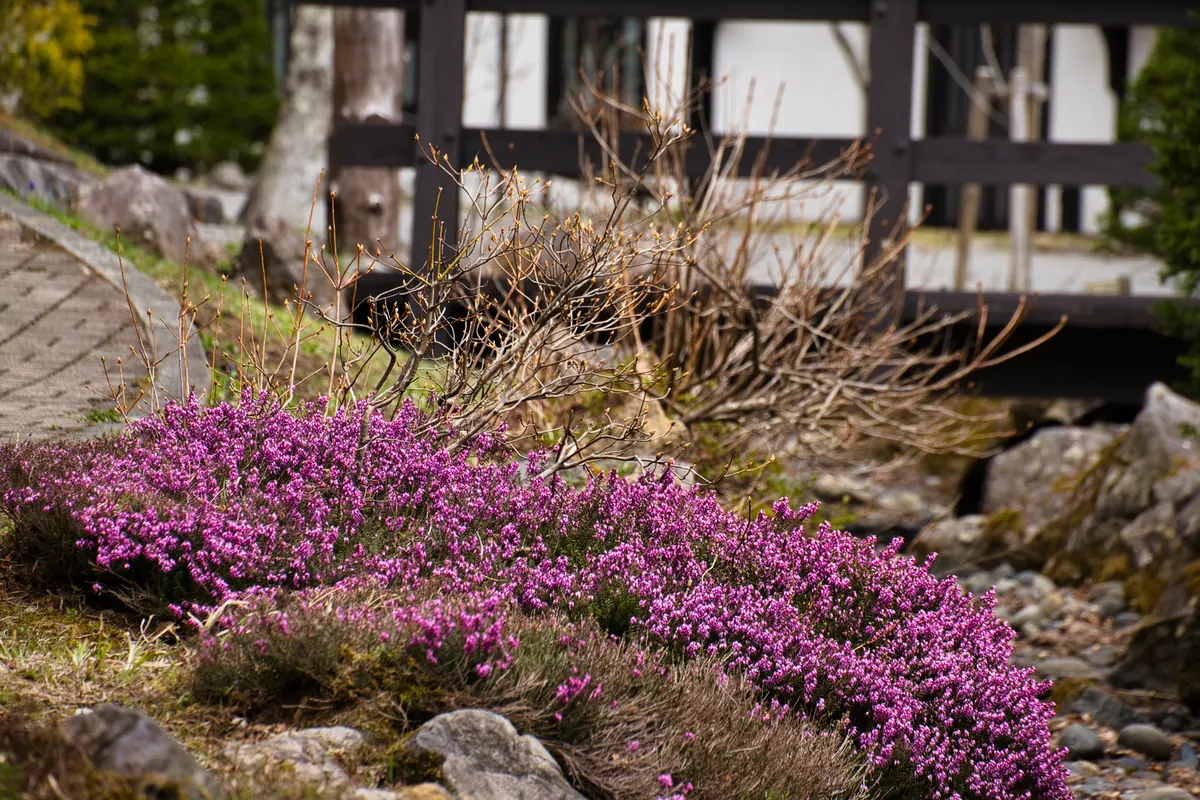
- Cross-leaved heath (Erica tetralix) — paler, dusty pink, and happiest in the wet, boggy corners. Its leaves grow in distinctive fours up the stem.
How strong a year it is depends on the weather. A damp spring followed by a warm, dry spell generally brings a good bloom. Heather beetle can strip patches brown in some summers, so if you find a swathe of dead-looking heather, walk a few hundred metres further before deciding you've mistimed it.
Two visits beat one: early August for bell heather, early September for ling.
West Norfolk: The Big Heaths
Roydon Common, between King's Lynn and Grimston, is one of the largest surviving lowland heaths in the county and a Norfolk Wildlife Trust reserve. Ling and bell heather cover the dry ridges, cross-leaved heath fills the hollows, and the site is known for adders and common lizards, so boots and a bit of noise are sensible.
Dersingham Bog, on the Sandringham estate, is a different experience: a natural bowl of heath and valley mire sitting below a wooded escarpment. Heather clothes the slope; the bog lies underneath it. Parking is very limited, and the best of the heather is a walk from the entrance, so allow more time than you think you need.
East Winch Common, a smaller reserve beside the A47 near King's Lynn, is the quiet option. An hour's wander is plenty, with heather, wet heath and birch scrub in close quarters.
North Norfolk and the Coast
Kelling Heath is the busiest of the northern heaths, with paths crossing open ground and the North Norfolk Railway running along its edge — worth timing a walk to see a steam train pass against the purple. Salthouse Heath, a little further east, is more open, with gorse, heather and long views towards the sea.
Holt Lowes, another Wildlife Trust reserve, is steeper and more wooded, with heath on the slopes and bell heather in the sunnier clearings. For something entirely different, head for the dunes and shingle ridges behind Blakeney Point and Scolt Head Island, where heather grows in low, wind-pruned patches. Access is on foot or by boat, and the nesting season runs into late summer, so keep to marked routes and keep dogs close.
The Broads and the Brecks
Buxton Heath, north of Norwich, mixes heath with mire and birch scrub, and the heather there draws a good range of dragonflies and bees. Alderford Common, near Reepham, offers a gentler heath-and-woodland walk.
In the Brecks, heather tends to grow in shorter, patchier swards, mixed with acid grassland and bracken. East Wretham Heath and the open common at Barnhamcross Common on the edge of Thetford are the places to start, and the forest rides around Thetford can be excellent too. What you lose in a single wall of purple you gain in emptiness — you can walk for an hour without meeting anyone.
Photographing the Bloom
Heather is one of the easier subjects in the Norfolk landscape, but a few habits make a real difference.
- Go early or late. Low sun behind the flowers turns each one into a lit speck and makes the whole slope glow.
- Don't wait for blue sky. Wet heather holds deeper colour, and overcast light is ideal for close work.
- Get down to flower height. Kneel, or hold a phone just above the stems and tilt it slightly upwards. Instant depth.
- Work two ways. A wide shot showing the sweep of a ridge and a close shot of a single bell heather flower, urn-shaped and speckled inside.
- Look for a line. A path, a fence, a row of pines or the sea in the background gives the eye somewhere to travel.
- Focus into the middle of the frame rather than on the nearest stem, and bring a cloth — heathland is often damp.
Looking After the Heath
Lowland heath is one of the rarest habitats in Britain, and what survives in Norfolk is managed by hand: grazing animals, cutting, scrub clearance, careful burning on rotation. Left alone, it turns into birch and pine within a generation. A few habits keep it open for everyone.
- Stay on paths. Heather is brittle and shallow-rooted; trampled stems can take years to recover.
- Don't pick it. Cut heather lasts a day; a picked plant may not flower next year.
- No fires, no barbecues, no disposable grills. Dry heather burns extraordinarily fast, and a wildfire can wipe out decades of growth and any ground-nesting birds with it.
- Keep dogs close and out of wet heath in spring and summer. Adders bask on warm paths, and ground-nesting birds are easily disturbed.
- Close gates behind you. Many reserves are grazed by ponies or cattle, and they do the work that keeps the heath open.
- Take litter home, and check before flying a drone — most reserves don't allow it without permission.
Planning Your Visit
If you can only go once, aim for the middle two weeks of August, when ling and the last of the bell heather usually overlap. If you have more time, go twice. Weekday evenings are quieter, the light is better and parking is easier. Wear boots and long trousers whatever the forecast, take water, and check the reserve's own pages before setting out — some sites close paths for grazing or ditch work in late summer.
One last thing. Heather looks purple from a car window and extraordinary from a path at eye level. Park, walk ten minutes, then stop and just listen: the hum of bees and the crackle of dry stems underfoot are as much a part of the season as the colour.
Photo: Zain Abba / Pexels